After shaving, it’s easy to write off a cluster of red bumps as standard irritation and something that will fade in a day or two without much thought. But some of those bumps aren’t razor bumps at all. In some cases, it can be a bacterial skin infection that looks nearly identical and won’t improve without the right treatment.
Knowing the difference matters. Keep reading to learn what sets these two conditions apart, who’s most likely to deal with each one, and when it’s time to see a dermatologist.
What Are Razor Bumps?
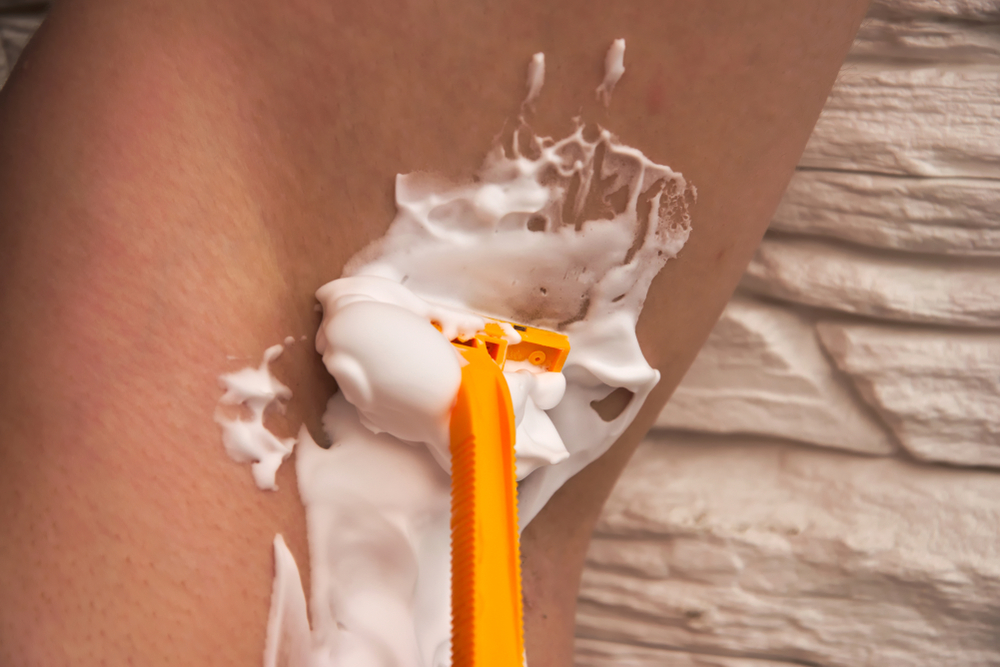
Razor bumps happen when shaved hairs curl back and grow into the surrounding skin instead of outward. The body treats those hairs like foreign objects, which triggers redness, swelling, and small raised bumps in the area.
People with naturally curly or coarse hair are most prone to razor bumps. The face, neck, bikini line, and legs are the most frequently affected spots, though razor bumps can appear anywhere that’s shaved.
The bumps themselves tend to be firm, skin-colored or slightly red, and mildly itchy. There’s usually no pus involved, just trapped hairs and inflammation.
What Is Bacterial Folliculitis?
Bacterial folliculitis is an infection of the hair follicles, most often caused by a common bacterium called Staphylococcus aureus (staph for short). When bacteria enter a follicle, through a nick from shaving, friction, or even just touching the skin, they can multiply and cause an active infection.
Unlike razor bumps, this is a true infection, not just mechanical irritation. The follicles become inflamed from the inside out, and the body mounts a response to fight off the bacteria.
Meghan Hession, MD, a board-certified dermatologist at Golden State Dermatology in San Mateo, explains how this distinction affects treatment:
“Razor bumps and bacterial folliculitis can look almost identical to the untrained eye, but they have entirely different causes. Razor bumps are a physical problem — a hair growing the wrong direction — while bacterial folliculitis is an active infection. Treating a bacterial infection with moisturizer and technique adjustments won’t resolve it, and treating razor bumps with antibiotics isn’t necessary. Getting the diagnosis right is the first step to actually clearing the skin.”
How Can You Tell the Difference?
This is where things get tricky, because both conditions produce clusters of small red bumps in shaved areas. There are, however, some reliable clues to look for.
The Appearance of the Bumps
Razor bumps are typically firm and raised, sometimes with a visible hair trapped inside. They don’t usually produce pus. Bacterial folliculitis, on the other hand, often produces small white or yellow pustules, bumps with a visible white or yellow center filled with fluid, centered around individual hair follicles.
Where They Show Up
Both can appear in shaved areas, but bacterial folliculitis isn’t limited to them. It can spread to non-shaved skin nearby, or show up in areas like the thighs, buttocks, or torso where friction and sweat are more of a factor.
How They Feel
Razor bumps are usually mildly itchy or tender but not particularly painful. Folliculitis bumps can be more noticeably sore, warm to the touch, or tender when pressed. A burning sensation alongside the redness is more characteristic of an infection than mechanical irritation.
How Quickly They Appear
Razor bumps typically show up within a day or two of shaving and stay in the shaved area. Folliculitis can appear in the same timeframe, but it tends to multiply and spread over time rather than staying contained. If new bumps keep cropping up days after shaving, especially in spots you didn’t shave, that’s worth paying attention to.
When Should You See a Dermatologist?
Some mild cases of folliculitis clear on their own with good hygiene and a break from shaving. But there are clear signals that it’s time to get a professional opinion rather than waiting it out.
If bumps are spreading, producing noticeable pus, growing larger, or haven’t improved after a week or two, a dermatologist can confirm what’s actually going on and prescribe the right course of treatment. Bumps that are unusually painful, warm, or accompanied by swollen lymph nodes or a fever need prompt attention, those are signs the infection may be deepening.
Naomi Han, PA-C, a provider at Golden State Dermatology in Brentwood, sees patients who’ve tried to manage folliculitis on their own without success:
“One of the most common scenarios we see is someone who’s been treating what they think are razor bumps for weeks with no improvement — sometimes things are even getting worse. A quick evaluation allows us to identify the type of folliculitis, whether it’s bacterial, fungal, or something else entirely, and prescribe the appropriate treatment. People are often surprised at how quickly their skin clears once they’re treating the right thing.”
It’s also worth seeing a dermatologist if folliculitis keeps coming back. Recurrent infections may point to an underlying factor, like a staph carrier state or an unrecognized skin condition, that can be addressed to prevent future flare-ups.
Treatments for Bacterial Folliculitis

Treatment depends on how widespread the infection is and how the skin is responding. Mild cases are typically managed with a topical antibiotic that’s applied directly to the affected area for one to two weeks. More widespread or stubborn cases may call for an oral antibiotic, which treats the infection from the inside. A dermatologist will choose the right antibiotic based on the likely bacteria involved and how the skin has responded to previous treatments.
Treating folliculitis is different from treating razor bumps. Razor bumps respond to adjustments like switching to a single-blade razor, shaving in the direction of hair growth, using a proper shaving cream, and giving the skin breaks between shaves. None of those changes will clear a bacterial infection on their own, and antibiotics aren’t needed for true razor bumps. Applying the wrong approach delays improvement and can allow an infection to worsen.
Getting the Right Diagnosis Makes All the Difference
Both razor bumps and bacterial folliculitis are very manageable conditions, but only when they’re properly identified. Misreading one for the other is easy to do, especially early on, and it can lead to weeks of frustration with treatments that simply aren’t designed for what’s actually happening.
A brief visit with a dermatologist removes the guesswork. With a clear diagnosis, the path to clearer, calmer skin becomes straightforward.
If you have questions about your skin, schedule an appointment at The Menkes Clinic today!